
Wood, Steel, Fiberglass
Program: Fiberglass / Composites (boatbuilding)
Wood, Steel, Fiberglass
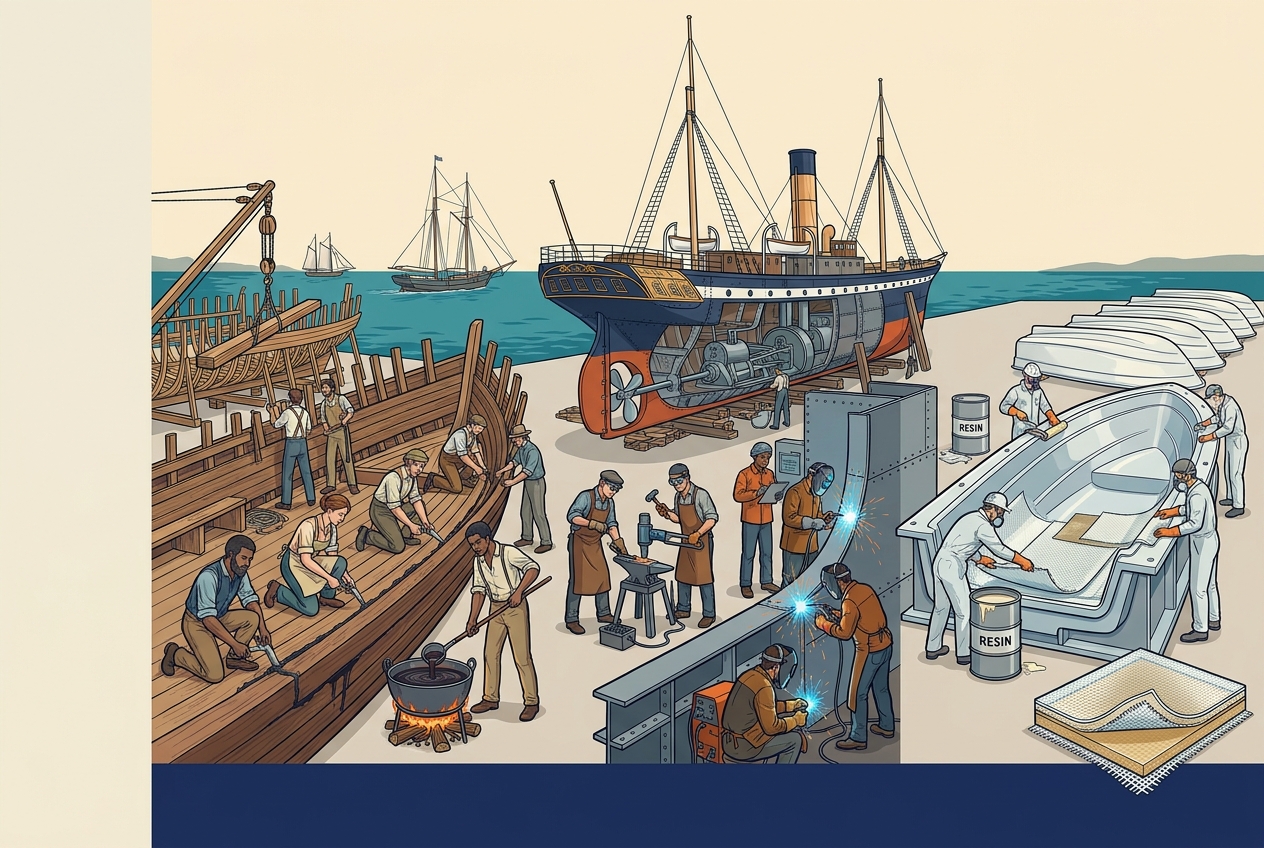
Three hulls stand in this gallery. Each material changed who could build a boat and how.
Wood. Keel, frames, planks. Caulkers drive cotton and oakum into the seams and pay them with pitch. Baltimore's Fells Point built clippers this way.
Iron and steel. 1843: Brunel's SS Great Britain, an iron-hulled screw steamer. Riveted plates, then welded plates. Shipfitters and welders replace shipwrights.
Fiberglass. Late 1940s: glass fiber and resin laid into a mold. One mold, many identical hulls. Recreational boating becomes a mass market.
Today. Aluminum workboats; carbon fiber racers; steel for ships of every size.
Try it. Lay up a sample: cloth, resin, roller. Then look through the cut edge of the hull mold.
 E5F8HR
reading