
Why Cities Go Up
Why Cities Go Up
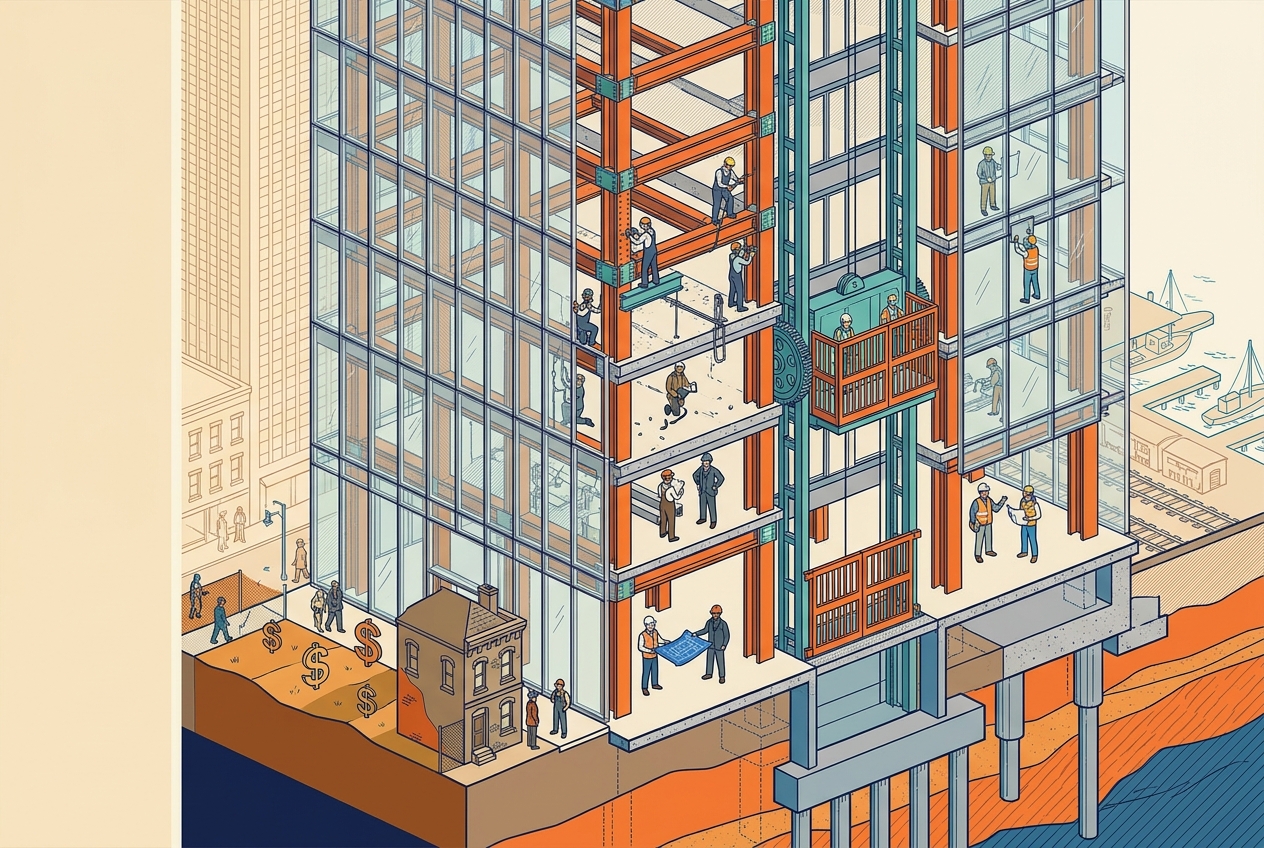
A city goes up when going out costs more than going up.
Land. In a central business district, land is the scarce thing. When a square foot of ground costs more than the structure needed to stack another floor on it, the tower pays for itself. Height is a land-price signal made of steel.
Access. People will pay to be near each other — near the port, the exchange, the courthouse, the clients. Density buys proximity; height buys density.
Technology. Three inventions let the price signal become a building: the steel frame (1885), the safety elevator (1853) and the curtain wall. Before them, walls carried the load and ten stories was the limit of masonry and legs.
Rules. Zoning, setbacks, floor-area ratio and the fire code decide how much of the price signal is allowed to stand.
Money. A tower is a financial instrument: pre-leasing, construction loans, rent per square foot per year. When the numbers fail, the crane stops.
Trades. None of it stands without the nineteen trades on the Survey-to-Skyline panel. The essential question of this museum: what conditions produce a vertical push? Land, access, technology, rules, money — and people who can build.
 8J5XNJ
reading